The media has always a lot of opinions on women's bodies, and when it comes to the menstrual cycle, there's no shortage of advice: What to eat, when to train, how to manage the hard weeks. Some of it is genuinely useful, but most of it is highly generalised. And almost none of it…accounts for the fact that your cycle, and how it affects your body, is entirely your own. That's the gap Cycle Patterns is here to close.
Available for iOS only
Connecting the dots
Your nervous system is kind of like the control centre of your body: it has a big influence on your menstrual cycle, and your cycle shapes it in return. Ever noticed your period is delayed during times when your social calendar is overflowing? Or how your mood swings get worse when you can't sleep? These aren't coincidences, they're patterns. In a review of 41 different scientific studies, the vast majority found a direct link between psychological stress and menstrual disruption, with irregular cycles being the most common outcome.
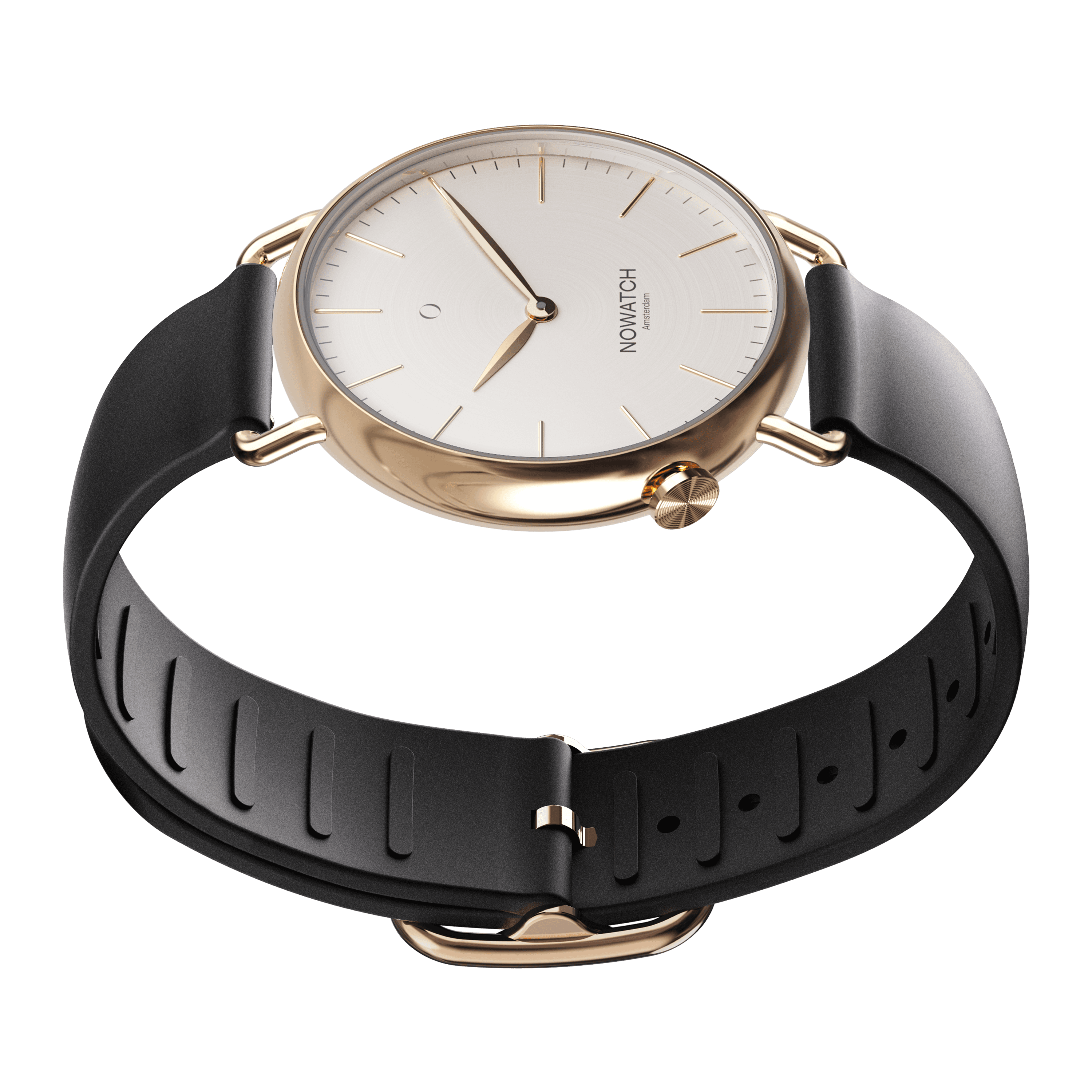
Cycle Patterns is the first health-tracking feature of it’s kind, connecting your cycle to all your other metrics like sleep, stress, activity, and mood. NOWATCH tracks all of these responses both in real time and over the long term, so you can see exactly why you might be feeling a certain way, and what helps you feel better.
Why we do differently
A lot of cycle tracking features already exist, but they only really tell you what phase you're in and offer general guidance about how that might influence your mind and body. Useful as a starting point, but built on population-level research, not your own personal data.
What actually determines how you feel in any given phase is specific to you: your stress load, your sleep quality, your recovery patterns. No guide or phase tip can account for all of that. The only way to truly understand your own cycle is to track it across enough time that your own patterns start to emerge from the noise.
That's what Cycle Patterns makes possible. NOWATCH's Reactivity Monitor™ already tracks every 10 seconds, building a minute-by-minute picture of your nervous system activity (Stress Duration, Stress Recovery time and Stress Frequency). Cycle Patterns overlays your cycle phase onto all of that in a single view, across weeks and months. The patterns that have always been there in your body, finally visible.
A deeper understanding of your body
Comfort, everyday.
+5 days battery life+Reactivity Monitor™
Figure out why some weeks just feel harder
You know the ones. Everything takes more out of you, the little things land heavier, and your usual ability to ‘just get on with it’ feels harder to access. It's easy to put it down to a bad week, but for a lot of people, it's the same week every month. Cycle Patterns lets you see how your stress duration and recovery time shift across your cycle, so if there's a phase where your nervous system is consistently working harder, you'll see it. The NOWATCH app has a library of different stress management tools, so if those tougher times arise each month, you can train your mind and body in how to handle them.
Sleep is one of those things that can look fine on paper until it doesn't feel fine at all. The hours are there, but the restoration isn't. What Cycle Patterns can reveal is how well your body is actually recovering during that sleep - you might be getting eight hours, but is your body actually relaxed during that time? After ovulation, progesterone raises your core body temperature by up to 0.7°C and your resting heart rate by ~4 bpm — for a lot of people this can disrupt the conditions your body needs for proper restorative sleep (even when the hours look the same).
Your cycle phases are compared to both sleep regularity, duration and your HRV: the key marker for assessing your overnight recovery. Once you can see how your cycle is affecting your sleep, you can start to make changes: figuring out which weeks you need to wind down earlier, where to ease off, and when to give your body a little more room to recover.
Understand why your cycle length might be changing
If your cycle length shifts around and you can never quite predict it, that uncertainty has a way of becoming stressful in itself. But irregular cycles often aren't as random as they feel. Cycle Patterns tracks how your stress load might align with those shifts over time and for a lot of people, a clear pattern emerges. The months that went long, or short, tend to follow the months that were a lot. Seeing that connection doesn't fix everything, but it gives you something real to work with.
Make sense of your mood swings
A dip in energy, a shorter fuse, a heaviness that doesn't quite match what's actually happening in your life: these moments are difficult, especially when they feel unpredictable. The NOWATCH app prompts you to log how you're feeling each day and spot how those entries connect to your cycle phase over time. Tumultuous moods that felt random might start to make sense, and that understanding alone can shift how you meet those moments, because you're no longer caught off guard by them.
How it works in the app
The Overview tab shows a cycle phase band beneath each metric (stress, sleep, HRV, skin temperature, resting heart rate), so you can see how your cycle aligns with shifts in each one across weeks and months.
The NOW tab puts your current cycle phase alongside your real-time data, in one place, so you always know where you are and how your body is responding to it. You’ll also see when your period is predicted and your estimated fertile windows.
If a new pattern or trend is emerging, the app will detects, and give you an Insight - our feature that helps you link certain metrics and offers science-backed advice tailored to your own personal patterns.
Your menstrual cycle and your nervous system are in a constant, two-way relationship, your cycle shapes how your body handles everyday stress and recovery, and your stress load shapes your cycle in return. That relationship has always been happening, whether you could see it or not. Cycle Patterns makes it visible, so you can start to understand it and experiment with what helps. And the more you understand it, the more power you have to work with your body — not against it.